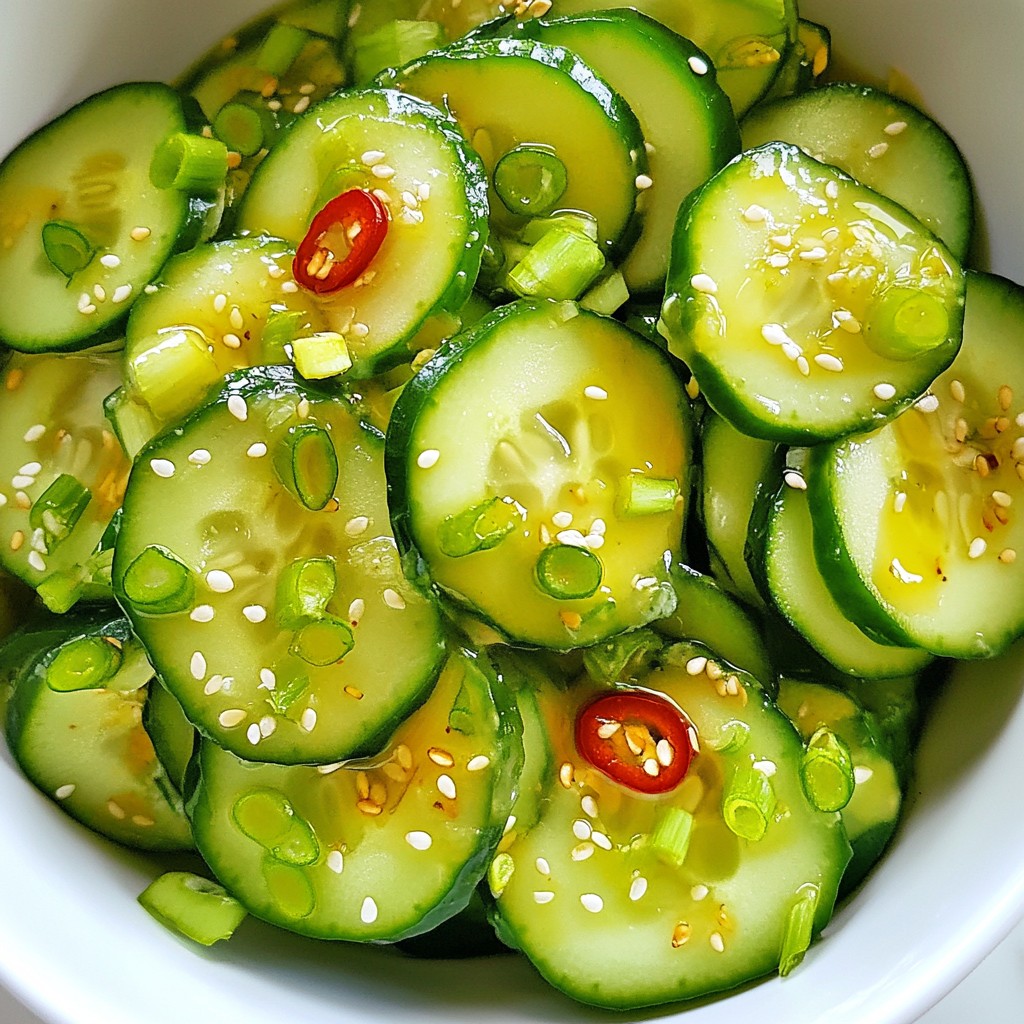
Are you craving a fresh and easy dish that bursts with flavor? This Sesame Ginger Cucumber Salad is your perfect choice! It's vibrant, crisp, and packed with zingy goodness. I’ll guide you through each step, sharing tips and tricks to elevate this salad from simple to sensational. Ready to impress your taste buds and your guests? Let’s dive into this delightful recipe!
Why I Love This Recipe
- Fresh and Crisp: This salad is incredibly refreshing, making it the perfect side dish for warm weather or a light meal.
- Quick and Easy: With minimal prep and just a few ingredients, this recipe can be made in no time, making it ideal for busy days.
- Flavorful Dressing: The combination of sesame oil, ginger, and rice vinegar creates a uniquely delicious dressing that elevates the simple cucumbers.
- Customizable: You can easily adjust the spice level by adding more or less chili, or even throw in other veggies for added crunch!
Ingredients
List of Essential Ingredients
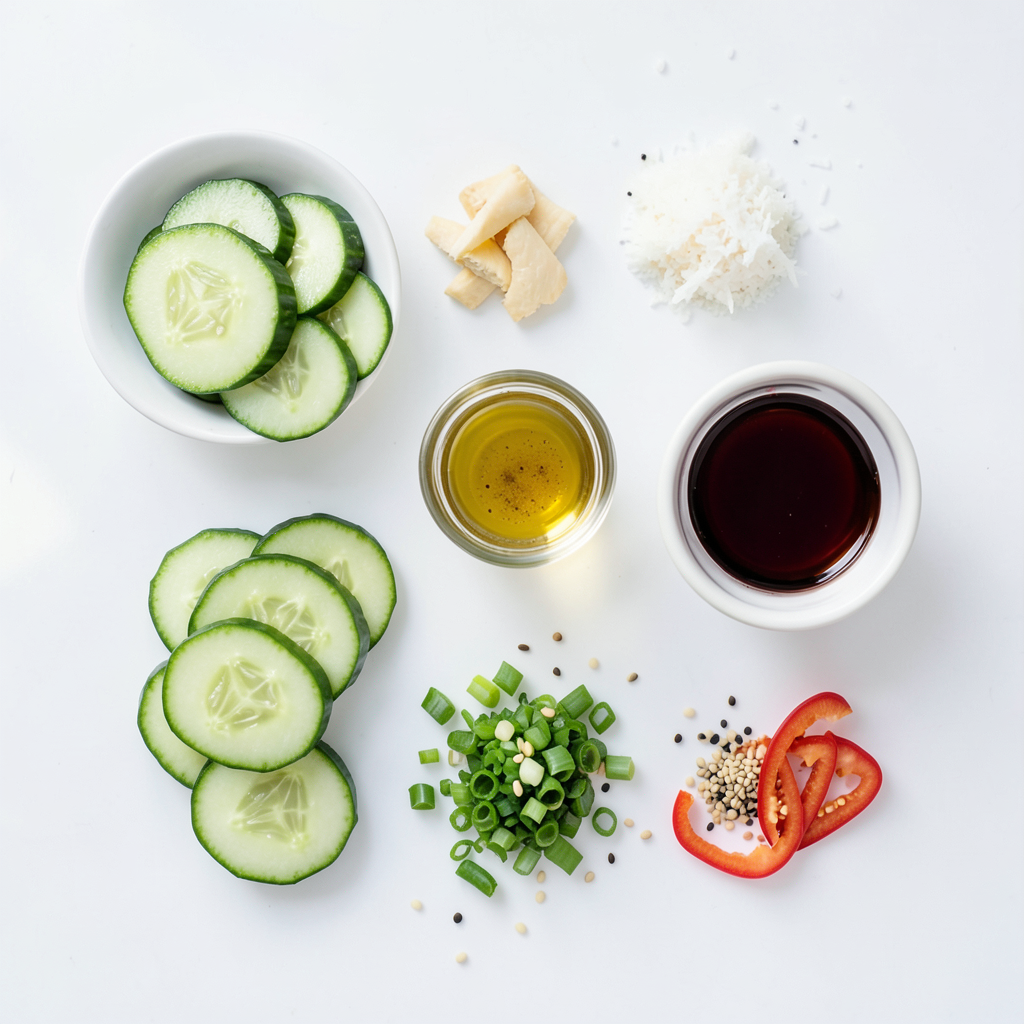
To make the Sesame Ginger Cucumber Salad, gather these key ingredients:
- 2 large cucumbers, thinly sliced
- 1 tablespoon salt
- 2 tablespoons sesame oil
- 1 tablespoon grated fresh ginger
- 2 tablespoons rice vinegar
- 1 tablespoon soy sauce (or tamari for gluten-free)
- 1 teaspoon honey or agave syrup
- 2 green onions, finely chopped
- 2 tablespoons toasted sesame seeds
- Optional: 1 small red chili, finely sliced (for heat)
Alternatives and Substitutions
If you lack any ingredients, here are some swaps:
- Use zucchini instead of cucumbers for a twist.
- Swap sesame oil with olive oil for a different flavor.
- Use apple cider vinegar in place of rice vinegar.
- For a sweeter taste, use maple syrup instead of honey.
- You can replace soy sauce with coconut aminos for a soy-free option.
Notes on Ingredient Quality
Quality matters in this salad. Fresh cucumbers are key. Look for firm, shiny skin without blemishes. For ginger, choose a root that feels firm and has a strong scent. Use pure sesame oil, not blended oils, for the best flavor. Always use fresh herbs and green onions for a bright taste. Quality ingredients shine in this dish.
Step-by-Step Instructions
Preparation of Cucumbers
First, take the two large cucumbers and wash them well. Then, slice them thinly. I like to use a sharp knife for even slices. Place the slices in a colander and sprinkle one tablespoon of salt on top. Let them sit for about 15 to 20 minutes. This step helps draw out extra water and keeps the salad crisp. After the time is up, rinse the cucumber slices under cold water to remove excess salt. Finally, pat them dry with a paper towel.
Making the Dressing
In a large mixing bowl, combine the dressing ingredients. Start with two tablespoons of sesame oil. Next, add one tablespoon of grated fresh ginger. Then, pour in two tablespoons of rice vinegar and one tablespoon of soy sauce. If you prefer gluten-free, you can use tamari instead. To balance the flavors, add one teaspoon of honey or agave syrup. Whisk all these ingredients together until they blend well. The dressing should smell fragrant and inviting.
Combining Ingredients
Now, it’s time to bring it all together. Add the drained cucumber slices to the bowl with the dressing. Toss them gently to coat every slice. Next, mix in the two finely chopped green onions and two tablespoons of toasted sesame seeds. If you want some heat, slice a small red chili and add it to the salad. Toss everything gently once more. For the best flavor, let the salad sit in the refrigerator for at least 10 minutes. This allows the flavors to meld beautifully, making every bite a delight.
Tips & Tricks
How to Remove Excess Water from Cucumbers
To keep your salad crisp, remove excess water from the cucumbers. Start by slicing the cucumbers thinly. Place them in a colander and sprinkle salt over them. Let them sit for about 15 to 20 minutes. The salt will draw out moisture. After this, rinse the cucumbers under cold water to remove the salt. Pat them dry with a paper towel. This method keeps the salad fresh and crunchy.
Enhancing Flavor Profiles
To boost the flavors in your salad, use fresh ingredients. Grate ginger for a bright, sharp taste. Use high-quality sesame oil for depth. You can also adjust the sweetness. Add honey or agave syrup to your taste. For a kick, include sliced red chili. This brings heat and excitement to the dish. Mixing in chopped green onions adds a fresh, oniony flavor. These tips will elevate your salad experience.
Serving Suggestions
Serve your salad in a chilled bowl for a nice touch. Garnish with extra sesame seeds and green onions on top. This makes the dish look vibrant and inviting. Pair the salad with grilled chicken or fish for a great meal. It also works well as a side for Asian-inspired dishes. For a light lunch, enjoy it with some rice or quinoa. This salad is fresh, easy, and perfect for any occasion.
Pro Tips
- Salting the Cucumbers: Salting the cucumbers before mixing them into the salad helps to draw out excess moisture, preventing the salad from becoming watery.
- Fresh Ingredients: For the best flavor, use fresh ginger and high-quality sesame oil. Fresh ingredients make a noticeable difference in taste.
- Marinating Time: Allow the salad to marinate in the refrigerator for at least 10 minutes before serving. This enhances the flavors and makes the salad more delicious.
- Customizing Heat: Adjust the amount of red chili to your preference. You can also use chili flakes or a dash of hot sauce for a different heat profile.
Variations
Additional Vegetables to Include
You can add more veggies to your salad. Carrots bring crunch. Bell peppers add color and sweetness. Radishes give a nice bite. You can also try adding thinly sliced cabbage or even shredded zucchini. These veggies boost flavor and nutrition.
Protein Additions for a Heartier Salad
If you want more protein, add cooked chicken or shrimp. Tofu works well too, especially if you use the firm kind. Edamame beans are a great choice as they are tasty and healthy. These additions make the salad filling and satisfying.
Different Dressings to Try
While the sesame dressing is amazing, you can switch it up. Try a peanut dressing for a nutty flavor. A spicy miso dressing adds heat and depth. You could even use a simple lemon vinaigrette for a fresh twist. Each dressing gives the salad a new vibe.
Storage Info
Best Practices for Storing Leftovers
To keep your sesame ginger cucumber salad fresh, store it in an airtight container. This helps keep the flavors intact and the cucumbers crisp. Make sure the lid seals well. If you have extra dressing, store it separately to prevent sogginess. You can add it just before serving.
How Long Will It Last in the Refrigerator?
When stored correctly, this salad stays good for about 3 days in the fridge. After that, the cucumbers may get too soft. Always check for freshness before eating. If it looks or smells off, it’s best to toss it.
Freezing Options and Tips
Freezing is not the best option for this salad. Cucumbers lose their crunch when frozen. If you want to keep the dressing, you can freeze it in small containers. Just thaw it in the fridge before using.
FAQs
Can I make this salad ahead of time?
Yes, you can make this salad ahead of time. Prepare it and chill it for up to two hours. This helps the flavors blend well. If you need to store it longer, keep the dressing separate. Add it just before serving to keep the cucumbers crisp.
What can I use instead of soy sauce?
You can use tamari as a gluten-free alternative. If you want a different flavor, try coconut aminos. It has a mild taste and is soy-free. For a tangy twist, you can even add a splash of lemon juice.
Is this recipe gluten-free?
Yes, this recipe can be gluten-free. Just use tamari instead of regular soy sauce. Always check your labels to ensure all ingredients are gluten-free. This way, everyone can enjoy the salad without worry.
How can I make it vegan-friendly?
To make this salad vegan, simply swap honey for agave syrup. Both add sweetness, but agave is plant-based. This keeps your salad delicious and suitable for vegan diets.
What are some good pairings for this salad?
This salad pairs well with grilled chicken or tofu. It also complements sushi or Asian noodle dishes. Serve it alongside rice for a filling meal. This salad brightens up any plate with its fresh flavors.
This blog post covers key ingredients, step-by-step instructions, and helpful tips for your salad. You learned about picking quality ingredients and how to prep them right. I shared ways to enhance flavor and suggested variations to fit your taste. Proper storage helps keep leftovers fresh. FAQs answer common questions, making this recipe easy to follow.
Now, I hope you feel ready to create a delicious salad that suits your needs. Enjoy trying out new flavors and ingredients!