
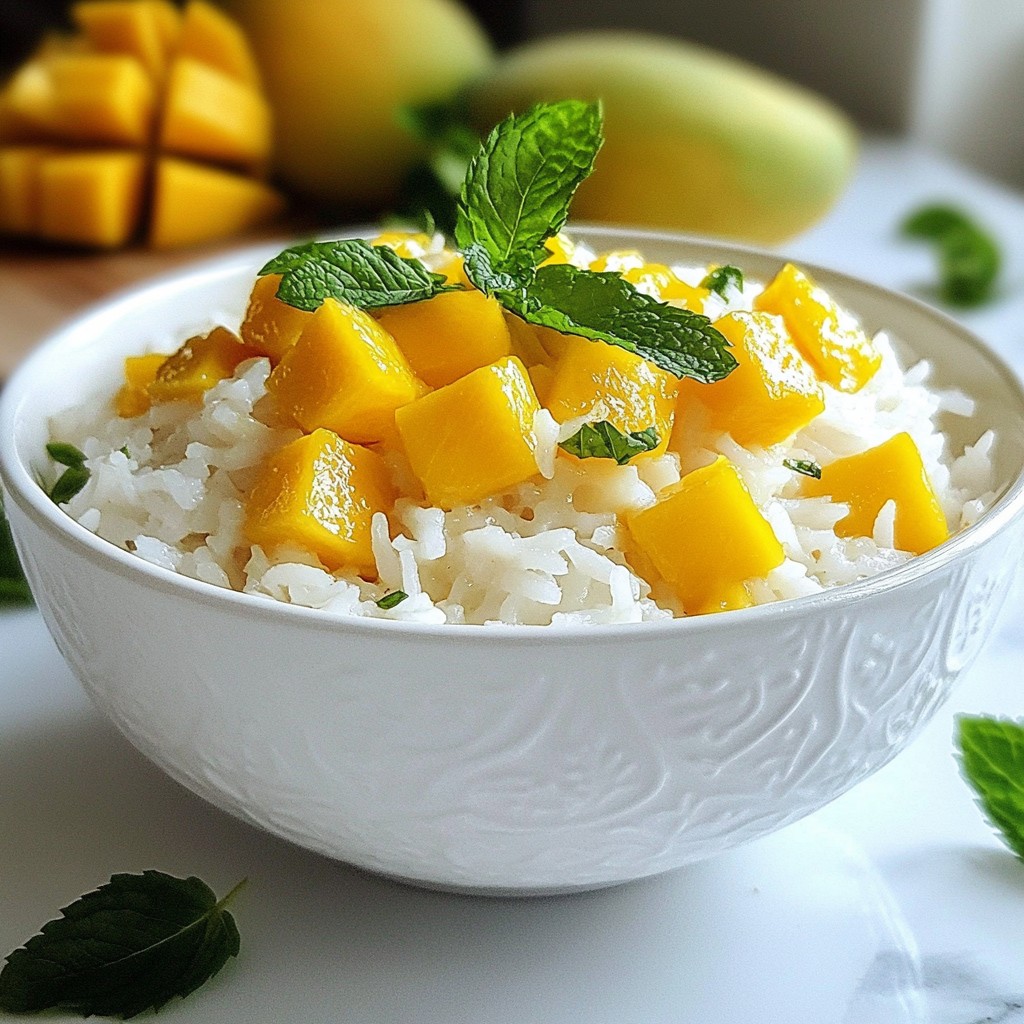
Thai Coconut Mango Rice is a delicious dish that combines sweet and creamy flavors. You’ll love how simple it is to make this tasty treat at home. Whether you want it as a dessert or a side, my easy recipe will guide you step-by-step. Get ready to impress your family and friends with this vibrant dish that captures the essence of Thai cooking. Let's dive in and discover how to make it!
Why I Love This Recipe
- Exotic Flavors: This recipe combines the rich creaminess of coconut milk with the sweetness of ripe mango, creating a delightful tropical experience.
- Easy to Prepare: With minimal ingredients and straightforward steps, this dish is perfect for both novice and experienced cooks.
- Versatile Dish: Whether served as a side or a dessert, this coconut mango rice complements a variety of meals and occasions.
- Healthy Ingredients: This recipe uses wholesome ingredients, making it a nutritious choice packed with flavor and goodness.
Ingredients
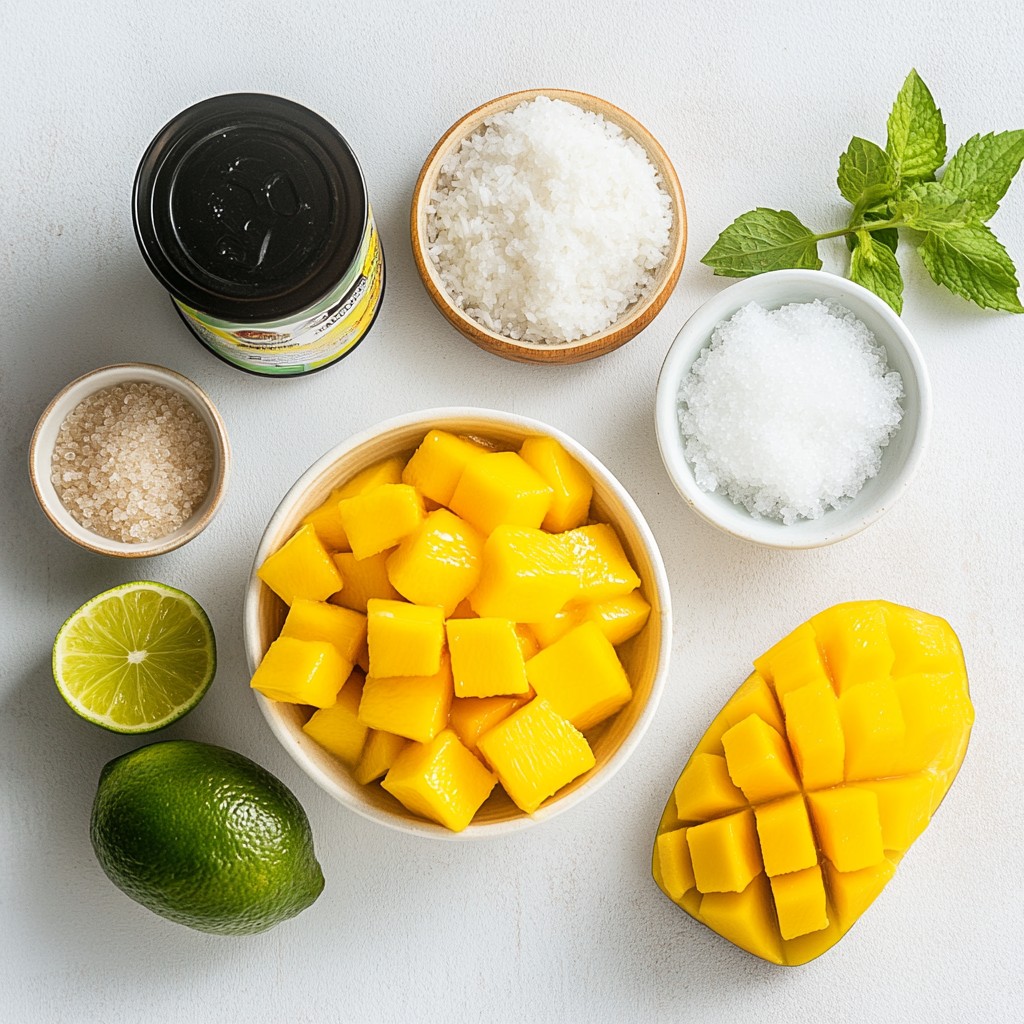
Complete list of ingredients for Thai Coconut Mango Rice
- 1 cup jasmine rice
- 1 can (13.5 oz) coconut milk
- 1 cup water
- 1 ripe mango, diced
- 3 tablespoons brown sugar
- 1 teaspoon salt
- 1 teaspoon vanilla extract
- 1 tablespoon lime juice
- Fresh mint leaves for garnish (optional)
Importance of each ingredient
Each ingredient plays a key role in the dish.
- Jasmine rice gives a soft texture and a nice aroma.
- Coconut milk adds creaminess and a rich, tropical taste.
- Water cooks the rice evenly.
- Ripe mango brings sweetness and fresh flavor.
- Brown sugar adds a hint of caramel notes.
- Salt enhances all the flavors in the dish.
- Vanilla extract adds a warm, sweet aroma.
- Lime juice gives a tangy kick that brightens the dish.
- Mint leaves add a fresh touch as a garnish.
Tips for selecting fresh mango
Choosing the right mango makes a big difference. Look for these signs:
- Color: A ripe mango has a vibrant color, often yellow or orange.
- Feel: It should give slightly when you press it.
- Aroma: A sweet scent near the stem indicates ripeness.
- Shape: Choose one that is plump and rounded, not flat or shriveled.
With these tips, you can pick the best mango for your Thai Coconut Mango Rice!
Step-by-Step Instructions
Detailed cooking instructions for perfect rice
To make Thai Coconut Mango Rice, start by rinsing the jasmine rice. Rinse it under cold water until the water runs clear. This step helps remove excess starch and makes the rice fluffy.
Next, in a medium saucepan, mix the rinsed rice with coconut milk, water, brown sugar, and salt. Stir everything well to combine.
Bring this mixture to a gentle boil over medium heat. Once it boils, turn the heat down low. Cover the pot and let it simmer for 15 to 18 minutes. You want the rice to be tender and most of the liquid absorbed.
After the rice is done cooking, remove the pot from the heat. Let it sit, still covered, for another 5 minutes. This steaming step helps the rice become even fluffier.
Now, fluff the rice using a fork. Add the vanilla extract and lime juice for extra flavor. Gently fold in the diced mango. Make sure to mix it in without mashing the fruit.
Cooking tips for beginners
If you are new to cooking rice, here are some tips. Always rinse your rice to achieve the best texture. Measure your water and coconut milk accurately for the right consistency.
When you cover the pot, make sure the lid fits tightly. This keeps the steam inside, helping the rice cook evenly.
If you find the rice too sticky, try rinsing it longer next time. For a creamier texture, you can add more coconut milk.
Additional methods (like rice cooker or Instant Pot)
You can also use a rice cooker or Instant Pot for this recipe. To make it in a rice cooker, follow the same steps for rinsing. Then, add all ingredients to the cooker. Use the white rice setting for perfect results.
If you want to use an Instant Pot, rinse the rice first. Add everything to the pot and seal the lid. Set it to cook for 4 minutes on high pressure, then let it release naturally for 10 minutes.
Using these methods can save time and effort while still giving you delicious Thai Coconut Mango Rice.
Tips & Tricks
Techniques to enhance flavor and texture
To make your Thai Coconut Mango Rice shine, focus on the details. Here are some tips:
- Rinse the rice: Always rinse jasmine rice. This step removes excess starch and makes the rice fluffy.
- Use full-fat coconut milk: Choose full-fat coconut milk for a rich, creamy texture. Light coconut milk lacks flavor.
- Add a pinch of salt: A little salt enhances sweetness. It balances the dish.
- Incorporate lime juice: The lime juice adds brightness. It lifts the sweet flavors of the mango.
Common mistakes to avoid
Even simple dishes can go wrong. Here are some common pitfalls:
- Skipping the rinse: Not rinsing the rice can lead to sticky, clumpy rice.
- Overcooking the rice: Watch the cooking time. Overcooked rice becomes mushy and loses texture.
- Neglecting to steam: Letting the rice steam after cooking is key. This step makes the rice light and fluffy.
- Mashing the mango: Gently fold in the mango. Mashing ruins the texture and the look.
Serving suggestions and ideal pairings
Thai Coconut Mango Rice is versatile. Here are some ideas for serving:
- As a side dish: It pairs well with grilled chicken or shrimp. The sweetness complements savory dishes.
- As a dessert: Serve it warm with a scoop of vanilla ice cream. It makes a lovely treat.
- Garnish with mint leaves: Fresh mint adds color and a refreshing taste. It enhances the dish’s appeal.
Feel free to mix and match these suggestions to find your favorite way to enjoy this delightful dish!
Pro Tips
- Rinse the Rice: Always rinse jasmine rice under cold water until the water runs clear. This removes excess starch, preventing the rice from becoming gummy.
- Check for Doneness: After 15 minutes of simmering, check the rice for tenderness. If it's still firm, cover and let it cook for a few more minutes to ensure it's perfectly cooked.
- Enhance Flavor: Adding vanilla extract and lime juice at the end brightens the flavors. Feel free to adjust the amounts to suit your taste preferences.
- Garnish for Freshness: Fresh mint leaves not only add color but also a refreshing taste. Consider using them as a garnish for an extra touch of flavor.
Variations
Vegan and gluten-free adaptations
You can easily make Thai coconut mango rice vegan and gluten-free. The base ingredients, like jasmine rice, coconut milk, and mango, are naturally vegan. Just ensure your brown sugar is vegan-friendly. Most types are, but some may use bone char in processing. This dish is also gluten-free, so it fits well in many diets. You can enjoy this recipe without worry!
Creative flavor additions (e.g., nuts, other fruits)
You can add your favorite nuts for crunch. Try toasted coconut, slivered almonds, or cashews. Nuts give a nice texture and flavor boost. You can also mix in other fruits like pineapple or kiwi for a tropical twist. Experiment with spices, too. A pinch of cinnamon or cardamom can add warmth and depth.
Serving as a dessert versus a side dish
This dish shines as both a dessert and a side dish. Serve it warm with fresh mint to brighten flavors. As a dessert, you can drizzle more coconut milk on top. It pairs nicely with grilled meats or seafood, too. Thai coconut mango rice is a versatile treat that you can enjoy any way you like!
Storage Info
Best practices for storing leftovers
After making Thai coconut mango rice, let it cool down to room temperature. Use an airtight container to store it. This keeps it fresh and tasty. You can store it in the fridge for up to four days. If you want to keep it longer, consider freezing it.
Reheating instructions
To reheat, you can use the microwave or stovetop. If using a microwave, place the rice in a bowl and add a splash of water. Cover the bowl to keep moisture in. Heat it for one to two minutes. Stir halfway through to ensure even warmth. For the stovetop, add the rice to a pan with a splash of water. Heat on low, stirring gently, until warm.
Freezing options for long-term storage
You can freeze Thai coconut mango rice for up to three months. Portion it into smaller containers or freezer bags. Make sure to label them with the date. When you’re ready to eat, thaw in the fridge overnight. Reheat as mentioned above. This way, you can enjoy the dish later without losing flavor.
FAQs
What can I substitute for jasmine rice?
If you do not have jasmine rice, you can use basmati rice or long-grain white rice. Both options will give you a nice texture. Just remember to adjust the water amounts based on the rice type. Basmati often needs less water, while long-grain rice may need a bit more. Rinse any rice you use to remove extra starch. This keeps your rice fluffy and prevents it from getting sticky.
How to choose the right mango for this recipe?
When picking a mango, look for one that feels slightly soft. This means it is ripe and ready to eat. The skin should have a nice golden hue, mixed with some red. Avoid mangoes with dark spots or wrinkles. You want the flesh to be sweet and juicy. If it is not ripe yet, let it sit at room temperature for a few days. Once ripe, you can store it in the fridge for a few days.
Can I make Thai Coconut Mango Rice ahead of time?
Yes, you can make Thai Coconut Mango Rice ahead of time. Cook the rice and let it cool before adding the mango. Store it in an airtight container in the fridge for up to three days. When ready to eat, you can reheat it gently in the microwave. Just add a splash of coconut milk or water to keep it moist. Mix in the mango right before serving to keep it fresh.
Is this dish suitable for meal prep?
Absolutely! Thai Coconut Mango Rice works great for meal prep. It is easy to make in large batches. You can pack it in containers for lunch or dinner. Pair it with grilled chicken or shrimp for a full meal. It also makes a healthy snack. Just remember to add the mango close to when you eat it. This keeps the fruit fresh and flavorful.
This blog post walks you through making Thai Coconut Mango Rice. We covered the key ingredients and tips for picking fresh mango. I provided step-by-step instructions, so beginners can follow along easily. We explored ways to enhance flavor and avoid common mistakes.
Additionally, I shared variations for different diets and served it as a dessert or side. Finally, we discussed how to store leftovers and answered common questions. Enjoy this dish, and feel free to make it your own with the tips you've learned!