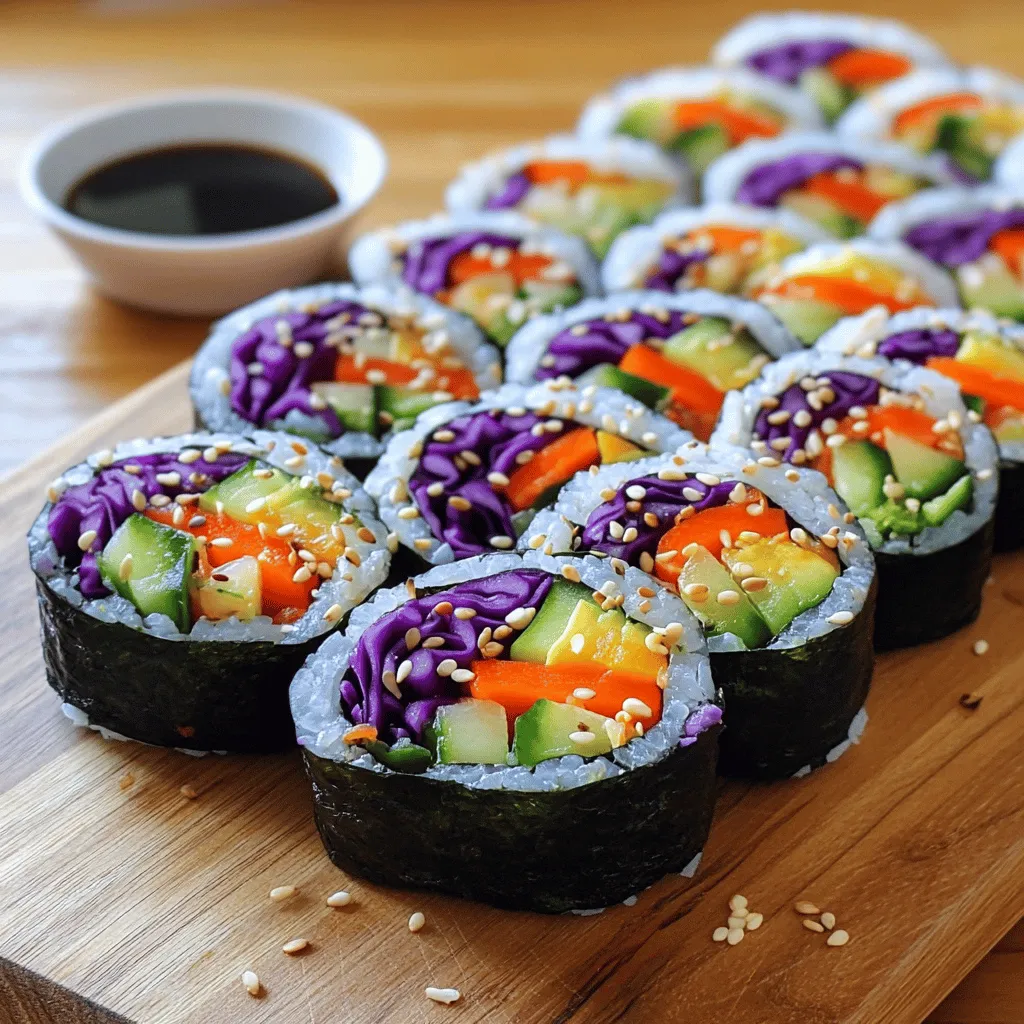
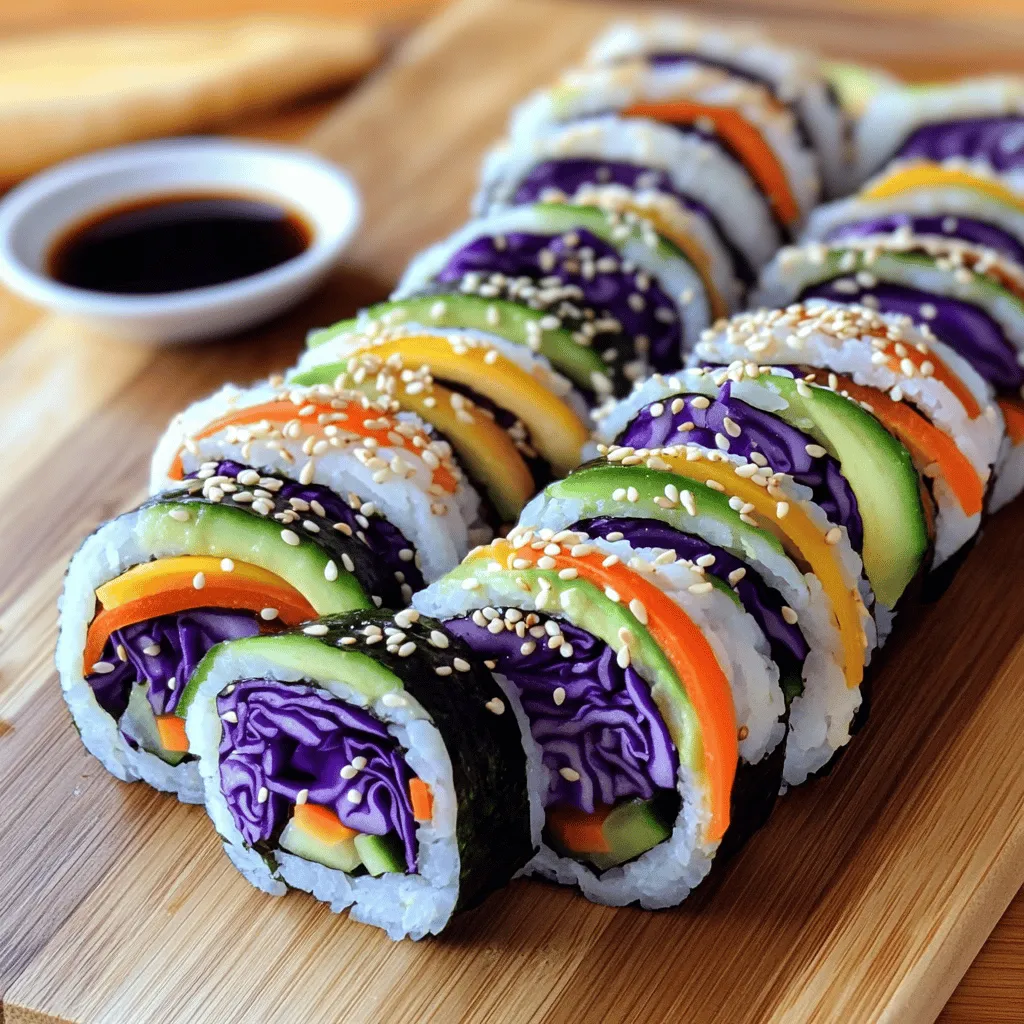
Are you ready to make healthy eating fun? Rainbow Veggie Sushi Rolls are colorful, tasty, and packed with nutrients. In this post, I’ll share the best tips on selecting fresh ingredients, rolling techniques, and creative ideas to customize your sushi. Whether you’re a sushi newbie or a seasoned pro, this guide will help you create beautiful rolls that wow both your eyes and your taste buds. Let’s dive in!
Ingredients
Essential Ingredients for Rainbow Veggie Sushi Rolls
To make Rainbow Veggie Sushi Rolls, you need some key ingredients. Here’s what you will need:
– 1 cup sushi rice
– 1 ¼ cups water
– 4 sheets nori (seaweed)
– ½ cup cucumber, julienned
– ½ cup bell peppers (red, yellow, green), thinly sliced
– ½ cup carrots, julienned
– ½ avocado, sliced
– ¼ cup purple cabbage, shredded
– 2 tablespoons rice vinegar
– 1 tablespoon sugar
– Salt to taste
– Soy sauce, for dipping
– Sesame seeds, for garnish
These ingredients create a colorful and fresh sushi roll. Each veggie adds a unique flavor and crunch.
Optional Ingredients to Enhance Flavor
You can boost the taste and texture of your sushi rolls with a few optional ingredients:
– Pickled ginger for a tangy kick
– Creamy hummus for added richness
– Spicy mayo for some heat
– Fresh herbs like cilantro or mint for freshness
These extras take your sushi experience to the next level.
Ingredient Substitutions
If you can’t find specific ingredients, don’t worry! Here are some easy swaps:
– Use brown rice instead of sushi rice for a healthier option.
– Substitute nori with soy paper for a different taste.
– Try zucchini or radish instead of cucumber for a twist.
– Replace avocado with a spreadable cheese for creaminess.
Feel free to mix and match based on what you have at home. Cooking should be fun and creative!
Step-by-Step Instructions
How to Prepare Sushi Rice
To start, rinse the sushi rice. Use a fine mesh strainer and cold water. Rinse until the water runs clear. This step removes extra starch, which helps the rice stick better.
Next, combine the rinsed rice and water in a pot. Bring it to a boil. Then, lower the heat and cover it. Let it simmer for 18-20 minutes. You want the water to be fully absorbed. After cooking, remove it from heat and let it sit for 10 minutes.
Now, it’s time to season the rice. In a small bowl, mix rice vinegar, sugar, and a pinch of salt. Stir until it dissolves. Gently fold this mixture into the rice. Be careful not to mash it. Let the rice cool to room temperature.
Assembling Your Sushi Rolls
Once the rice is cool, prepare your veggies. Julienne the cucumber and carrots. Thinly slice the bell peppers and avocado. Shred the purple cabbage.
Now, let’s assemble the rolls. Place a sheet of nori on a bamboo sushi mat or a clean surface. Wet your hands to keep the rice from sticking. Spread a thin layer of rice over the nori, leaving a one-inch border at the top.
Next, it’s time to add your colorful veggies. Lay out the rainbow of vegetables horizontally in the center of the rice-covered nori. Start with purple cabbage, then add carrot, bell peppers, cucumber, and avocado.
Rolling Techniques for Perfect Sushi
Now comes the fun part—rolling! Starting from the bottom, lift the mat. Roll the nori tightly away from you. Press gently but firmly as you go. This helps keep the roll tight. When you reach the edge, seal it with a little water.
To finish, use a sharp knife to slice the roll into 6-8 pieces. Wipe the knife blade between cuts for clean edges. Repeat this process with the remaining nori sheets and fillings.
Finally, sprinkle sesame seeds on the rolls for added texture. Serve with soy sauce for dipping. Enjoy your colorful and healthy sushi!
Tips & Tricks
Tips for Cutting Veggies Perfectly
Cutting veggies for sushi can be fun. Start with a sharp knife. It helps make clean cuts. Use a cutting board that won’t slip. For cucumbers and carrots, slice them into thin strips, about ¼ inch wide. Keep the pieces uniform for even rolling.
For bell peppers, cut them into thin strips too. Start with the top and bottom, then remove the seeds. Slice the flesh into thin pieces. Purple cabbage should be shredded thinly.
Here’s a quick recap:
– Use a sharp knife.
– Keep cuts even and thin.
– Practice makes perfect!
Tricks for Keeping Sushi Fresh
Freshness is key for great sushi. Wrap your rolls in plastic wrap if you’re not eating them right away. This keeps the rolls moist. Store them in the fridge, but not for too long. Sushi is best eaten fresh.
If you have leftover sushi rice, keep it in an airtight container. Rice can dry out quickly. Add a little water before reheating. Heat it just enough to warm it up.
Quick tips:
– Wrap rolls in plastic wrap.
– Store in the fridge.
– Keep rice in an airtight container.
Presentation Tips for Visual Appeal
A beautiful sushi roll is a feast for the eyes. Use a clean, white plate to show off the colors. Slice the rolls at an angle for a fancy look. Arrange them in a circle or line on the plate.
Sprinkle sesame seeds on top for a nice touch. You can also add a small bowl of soy sauce for dipping. Consider adding a slice of lime or a sprig of cilantro for color.
Simple presentation ideas:
– Use a white plate for contrast.
– Slice rolls at an angle.
– Add garnishes like sesame seeds or herbs.
Variations
Different Vegetable Combinations
You can mix and match your veggies for fun flavors. Try using different colors and textures. Instead of cucumber, use zucchini or radishes. Swap bell peppers for sweet corn or snap peas. For a crunch, add jicama or green beans. You can also use seasonal vegetables to change things up. This keeps your sushi fresh and exciting.
Adding Proteins to Your Sushi Rolls
Adding protein makes your sushi even tastier. You can use cooked shrimp or crab for a seafood twist. If you like chicken, try shredded rotisserie chicken. For a plant-based option, toss in tofu or tempeh. Marinate your protein in soy sauce or teriyaki for extra flavor. This variation makes your rolls more filling and satisfying.
Vegan vs. Non-Vegan Options
Rainbow veggie sushi rolls can be both vegan and non-vegan. If you want a vegan roll, stick with veggies and rice. Use avocado for creaminess and flavor. For a non-vegan option, add fish or seafood. You can also use egg for a unique touch. Just remember to check labels for vegan-friendly sauces. Both options are delicious and fun to make.
Storage Info
How to Store Leftover Sushi Rolls
Storing leftover sushi rolls is simple. First, wrap each roll in plastic wrap. This helps keep the rolls moist. Place the wrapped rolls in an airtight container. Store them in the fridge. Eat the leftovers within 24 hours for the best taste.
Best Practices for Keeping Ingredients Fresh
To keep your sushi ingredients fresh, store them correctly. Place vegetables in a sealed bag with a damp paper towel. This keeps them crisp. Store sushi rice in an airtight container in a cool, dry place. For nori, keep it in its original packaging or in a sealed bag.
Reheating Sushi: Is It Recommended?
Reheating sushi is not usually recommended. Sushi is best enjoyed fresh. If you must reheat it, do so gently. Use a microwave on low power for a few seconds. This helps avoid making the rice tough. Always check for freshness before eating leftover sushi.
FAQs
What is the best rice for sushi?
The best rice for sushi is short-grain sushi rice. This rice is sticky and holds together well. It helps the rolls maintain their shape. You can find sushi rice at most grocery stores. Make sure to rinse it before cooking to remove excess starch. This step is key for great texture.
Can I make sushi rolls without nori?
Yes, you can make sushi rolls without nori. Many people use thin slices of cucumber or bell pepper instead. These options add crunch and flavor. You can also use a rice paper wrapper for a different texture. Be creative and use what you like!
How long can homemade sushi be stored?
Homemade sushi is best eaten fresh. You can store it in the fridge for up to 24 hours. Wrap it tightly in plastic wrap to keep it fresh. If you leave it out too long, the rice can dry out. Always check for taste and smell before eating leftovers.
Rainbow veggie sushi rolls offer a fun and tasty way to enjoy veggies. You learned about essential and optional ingredients, as well as substitutes for your rolls. I shared step-by-step instructions to help you prepare sushi rice and roll it perfectly. Plus, tips for cutting veggies and keeping sushi fresh make this easy. Explore different flavors by mixing vegetables and proteins. Remember, store leftovers carefully to keep them fresh. With practice, you’ll create beautiful sushi rolls full of flavor and color. Enjoy making this vibrant dish!