If you're craving a meal that bursts with flavor but is still easy to make, you're in for a treat! Korean Beef Bulgogi Bowls are not only delicious but also perfect for any night of the week. In this post, I'll share the key ingredients, step-by-step cooking instructions, and plenty of tips to help you create this mouthwatering dish at home. Grab your apron, and let’s get started on this tasty adventure!
Why I Love This Recipe
- Bold Flavors: The marinade combines sweet, salty, and spicy elements that create a deliciously complex flavor profile.
- Quick and Easy: This recipe comes together in under an hour, making it perfect for a weeknight dinner.
- Customizable: You can easily adjust the toppings to suit your taste, whether you prefer more veggies or extra spice.
- Healthy and Wholesome: With fresh vegetables and lean protein, these bowls are a nutritious option for any meal.
Ingredients
Main Ingredients for Korean Beef Bulgogi Bowls
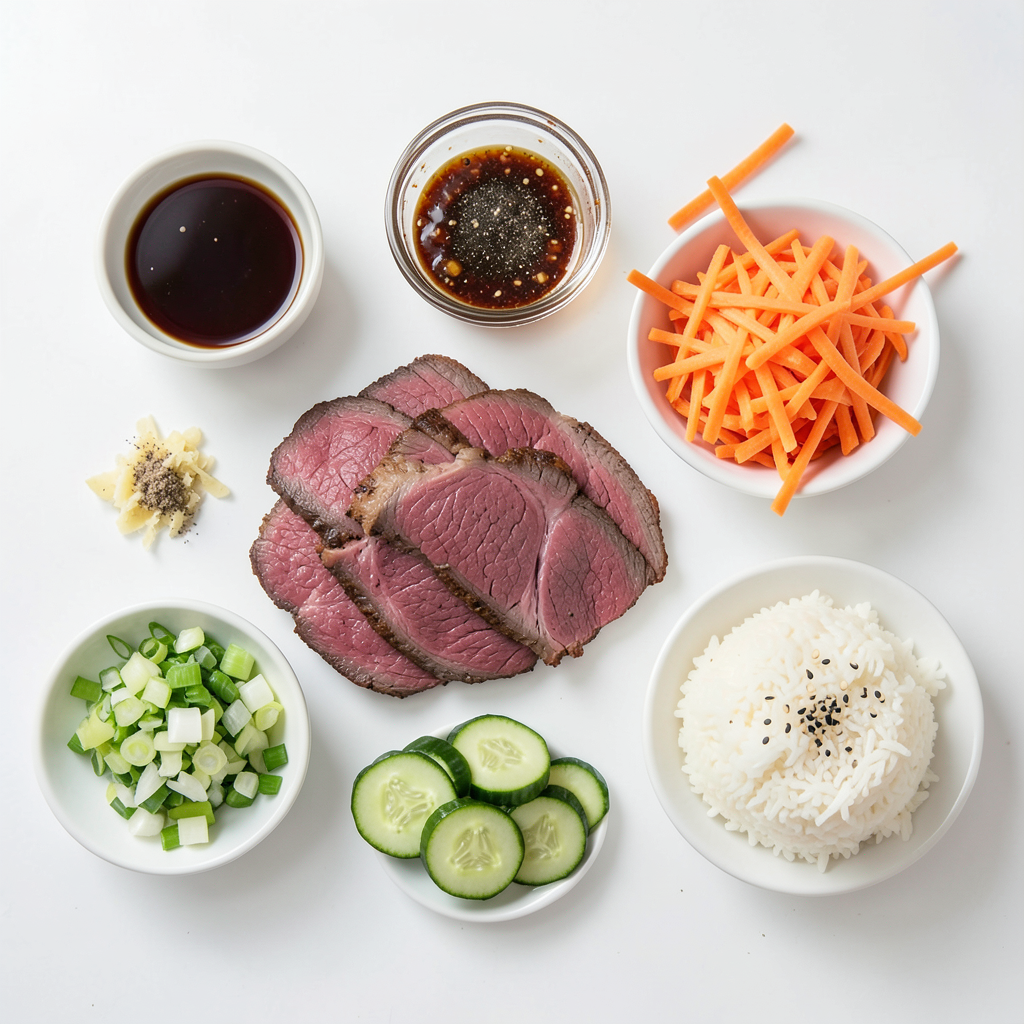
To make tasty Korean Beef Bulgogi Bowls, gather these main ingredients:
- 1 lb beef sirloin, thinly sliced
- 1/4 cup soy sauce
- 2 tablespoons brown sugar
- 1 tablespoon sesame oil
- 2 cloves garlic, minced
- 1 inch ginger, grated
- 1 teaspoon black pepper
- 1 tablespoon gochujang (Korean chili paste)
- 2 green onions, chopped
- 1 cup cooked jasmine rice
- 1/2 cup shredded carrots
- 1/2 cucumber, sliced
These ingredients create a rich and savory flavor that is hard to beat.
Optional Ingredients and Garnishes
You can enhance your bulgogi bowl with these optional ingredients:
- 1/2 cup kimchi (for a spicy kick)
- Sesame seeds (for garnish)
Adding kimchi brings a nice crunch and tang, while sesame seeds add a nutty flavor.
Substitutions and Alternatives
If you can't find certain ingredients, here are some great substitutes:
- Use flank steak or ribeye instead of sirloin for different textures.
- Replace gochujang with sriracha or another chili paste for heat.
- Swap jasmine rice for brown rice or cauliflower rice for a healthier option.
These substitutions can keep the dish tasty while meeting your needs.
Step-by-Step Instructions
Preparing the Marinade
To start, gather a mixing bowl. In it, combine these ingredients:
- 1/4 cup soy sauce
- 2 tablespoons brown sugar
- 1 tablespoon sesame oil
- 2 cloves garlic, minced
- 1 inch ginger, grated
- 1 teaspoon black pepper
- 1 tablespoon gochujang
Stir these together until they mix well. This mix is your marinade. It adds rich flavor to the beef.
Marinating the Beef
Next, take the 1 pound of thinly sliced beef sirloin. Add it to the marinade. Make sure every piece is coated. Cover the bowl with plastic wrap. Place it in the fridge for at least 30 minutes. If you have time, let it marinate for up to 2 hours. This gives the beef more flavor.
Cooking the Beef and Assembling the Bowls
Heat a large skillet or grill pan over medium-high heat. Once hot, add the marinated beef. Discard any leftover marinade. Cook the beef for about 4 to 5 minutes. Stir it occasionally. The beef should be cooked through and slightly caramelized.
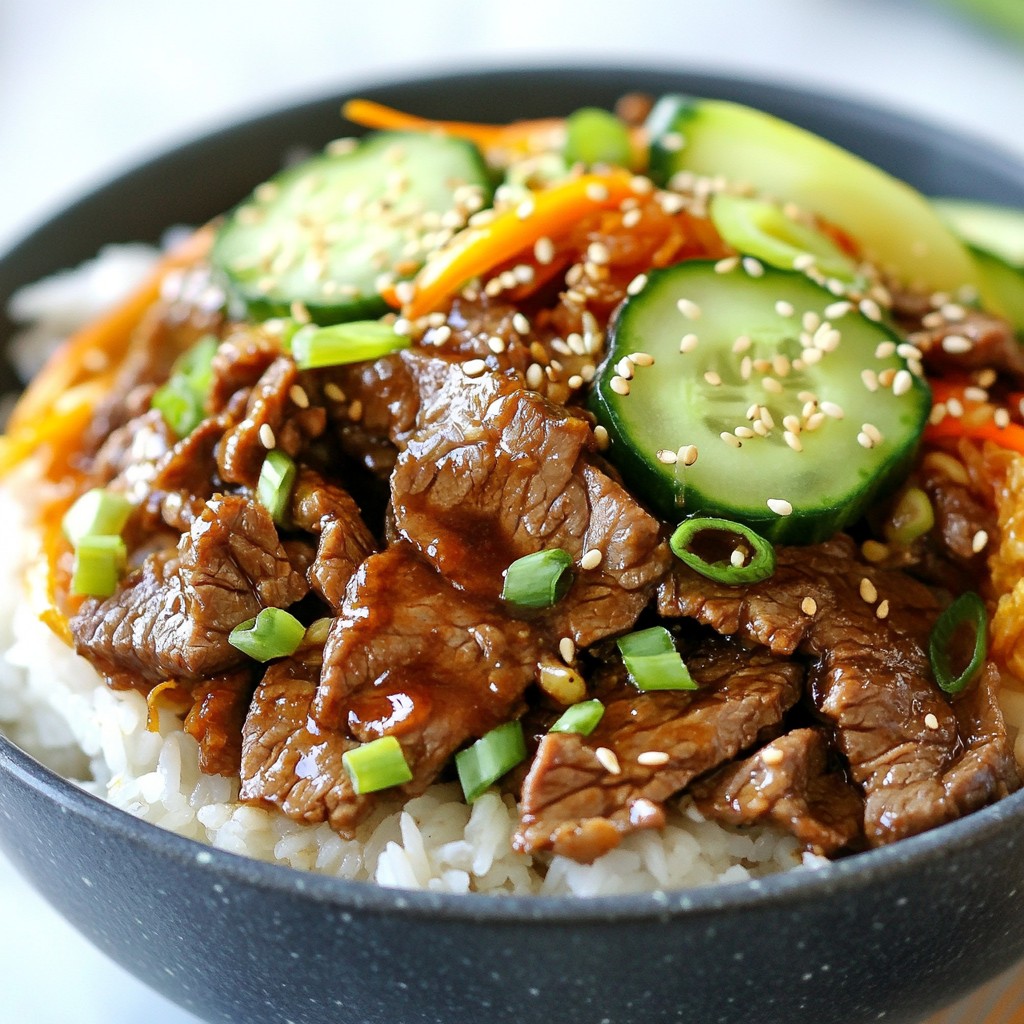
While the beef cooks, prepare your bowls. Start with a base of 1 cup of cooked jasmine rice in each bowl. Top the rice with the cooked bulgogi beef. Add shredded carrots, cucumber slices, and kimchi if you like.
Finish by garnishing each bowl with chopped green onions and a sprinkle of sesame seeds. Serve it in bright bowls for a fun look. Use chopsticks or small spoons to eat for an authentic feel. Enjoy your meal!
Tips & Tricks
How to Ensure Tender Beef
To get tender beef, start with sirloin. Slice it thinly against the grain. This helps break down the muscle fibers. Marinate the beef for at least 30 minutes. You can go longer for even better flavor. The marinade’s sugars also help with tenderness.
Best Practices for Marinating
Always use a non-metal bowl for marinating. Metal can react with the soy sauce. Coat the beef well in the marinade. Make sure every piece gets some sauce. Cover the bowl tightly and place it in the fridge. Marinate for up to 2 hours for the best taste. Remember, don’t reuse the marinade after taking the beef out.
Serving Suggestions for Authentic Experience
To serve your bulgogi bowls, start with jasmine rice as the base. Add the cooked beef on top. Layer on shredded carrots and cucumber slices for crunch. If you like spice, include kimchi. For garnish, sprinkle green onions and sesame seeds. Use colorful bowls to make it pop. Enjoy your meal with chopsticks for a true Korean vibe!
Pro Tips
- Marinate Longer for Flavor: For the best flavor, allow the beef to marinate for at least 1 hour, or up to 2 hours if time permits. This allows the flavors to penetrate the meat deeply.
- Use a Hot Pan: Make sure your skillet or grill pan is hot before adding the beef. This helps to sear the meat quickly, locking in juices and enhancing caramelization.
- Customize Your Veggies: Feel free to add or substitute your favorite vegetables in the bowls, such as bell peppers, radishes, or snap peas, for added color and nutrition.
- Serve with Fresh Herbs: Adding fresh herbs like cilantro or mint can elevate the flavors and add a refreshing touch to the dish. Sprinkle them on just before serving.
Variations
Vegetarian or Vegan Options
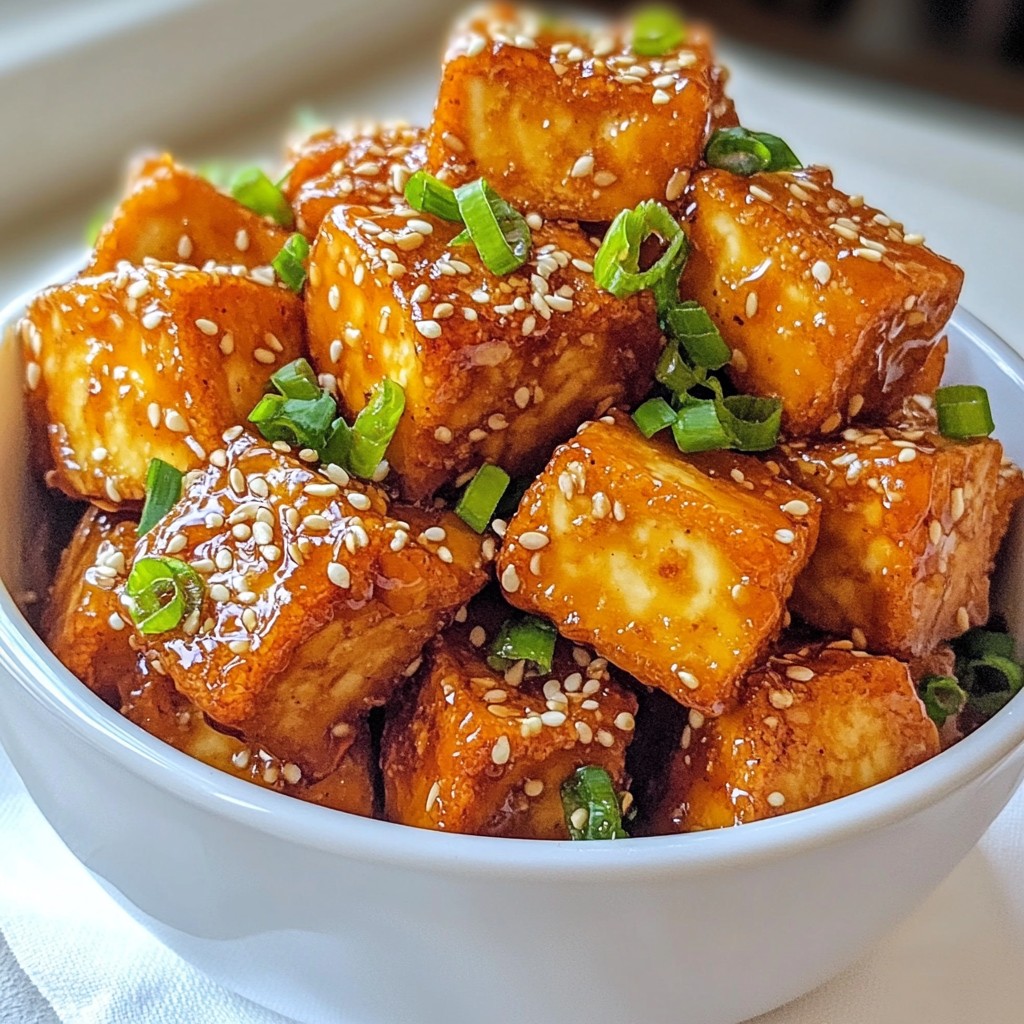
You can easily make this dish vegetarian or vegan. Instead of beef, use tofu or tempeh. Slice it thinly and marinate just like the beef. For the sauce, keep the same base. Just check that your soy sauce is vegan. You can also add more veggies, like bell peppers or mushrooms. They soak up the flavor well.
Different Meat Choices
Bulgogi isn't just for beef. You can use pork or chicken, too. Thinly slice those meats and marinate as you would with beef. The cooking time may vary slightly. Chicken cooks faster, so watch it closely. Pork can give a nice twist to the flavor profile.
Flavor Variants with Different Sauces
Feeling creative? Change the sauce for a new taste. Try using teriyaki sauce for a sweeter flavor. Or, mix in some spicy sriracha if you like heat. You can even add a splash of pineapple juice for a tropical twist. Each sauce brings its own flair to the dish.
Storage Info
How to Store Leftover Bulogi Bowls
To keep your leftover bulgogi bowls fresh, place them in airtight containers. Make sure to separate the beef from the rice and veggies. This helps maintain texture and flavor. Store them in the fridge for up to three days. If you want to keep them longer, freezing is a great option.
Reheating Instructions
When you're ready to enjoy the leftovers, reheat them gently. You can use a microwave or a skillet. If using a microwave, heat in short intervals. Stir in between to ensure even warming. In a skillet, add a splash of water to keep it moist. Heat on medium until hot.
Freezing Tips for Bulk Meal Prep
For meal prep, freeze the beef bulgogi in serving sizes. Use freezer-safe bags or containers. Remove as much air as possible to prevent freezer burn. You can freeze the cooked beef for up to three months. Just remember to thaw it in the fridge overnight before reheating. Enjoy your tasty meal later!
FAQs
What is Bulgogi?
Bulgogi is a popular Korean dish made from thinly sliced beef. It is usually marinated in a mix of soy sauce, sugar, sesame oil, and spices. The marinade gives the beef a sweet and savory flavor. After marinating, the beef is cooked quickly over high heat. This keeps it tender and juicy. Bulgogi often serves as the main part of a meal, like in Korean Beef Bulgogi Bowls.
Can I make this recipe in advance?
Yes, you can make this recipe in advance. The beef can marinate for up to two hours, but you can also marinate it overnight. This deepens the flavor. You can cook the beef and store it in the fridge for up to three days. Just reheat it gently before serving. Prepare the rice and veggies fresh for the best taste.
What side dishes pair well with Korean Beef Bulgogi Bowls?
Korean Beef Bulgogi Bowls taste great with several side dishes. Here are some good options:
- Kimchi: This spicy fermented cabbage adds a tangy kick.
- Pickled vegetables: These add crunch and flavor.
- Steamed broccoli or bok choy: These add a fresh, healthy touch.
- Miso soup: This warm soup complements the meal.
Serve any of these sides to create a full, tasty meal!
Korean Beef Bulgogi Bowls combine tasty beef, rich flavors, and fresh ingredients. We explored the key ingredients, easy steps, and helpful tips for great results. You learned about variations and how to store leftovers. I hope these details make cooking this dish fun and easy. Enjoy the bold flavors and share your bowls with friends. You now have the tools to create a delicious meal. Happy cooking!