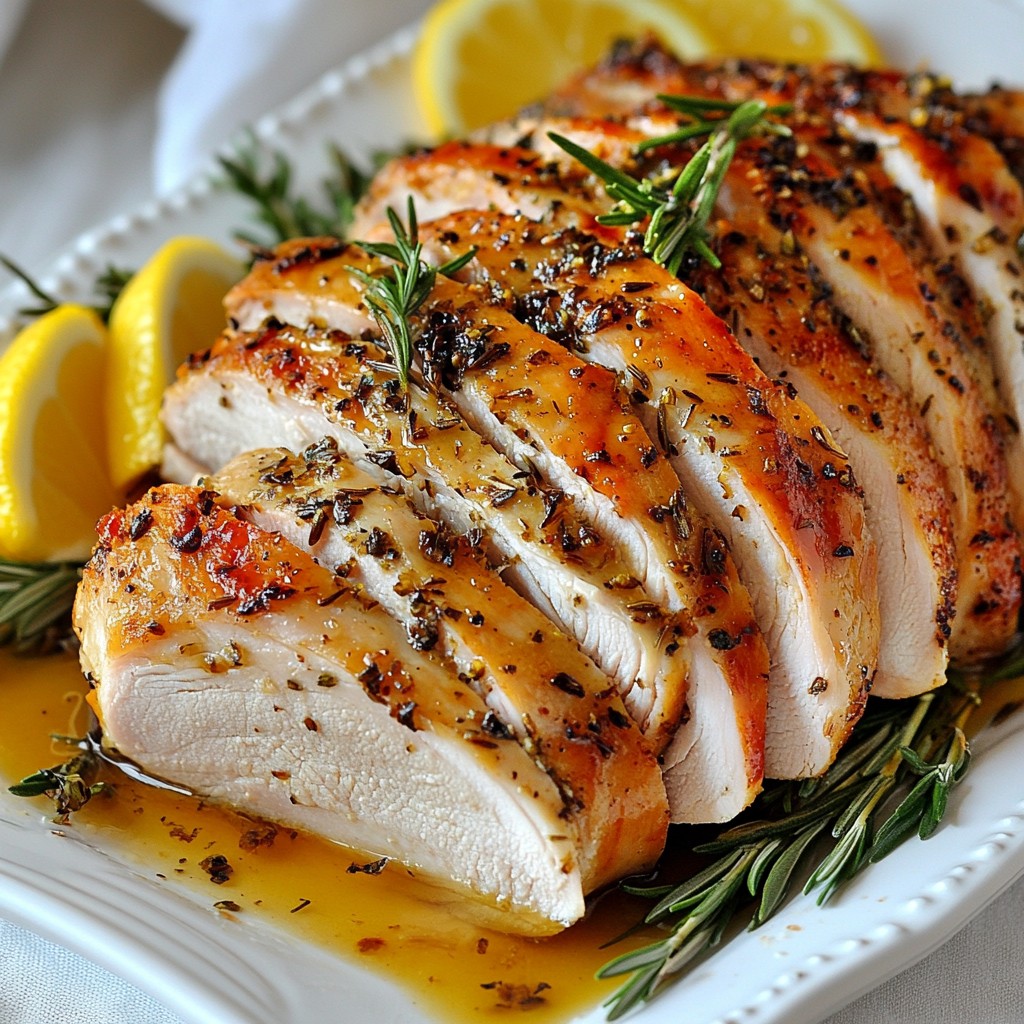
Ready to impress your guests with a dish they won't forget? This Juicy Keto Herb-Roasted Turkey Breast recipe keeps it simple while packing in loads of flavor. With just a few key ingredients and easy steps, you'll create a mouthwatering meal that's perfect for any occasion. Whether you’re a keto lover or simply looking for something tasty, this guide will help you roast the perfect turkey breast. Let’s dive in!
Why I Love This Recipe
- Flavorful Herb Blend: The combination of fresh herbs like rosemary, thyme, and sage creates a fragrant and mouthwatering flavor that elevates the turkey breast to a whole new level.
- Keto-Friendly: This recipe is perfect for those following a keto diet, as it is low in carbs while still being rich in flavor, making it a satisfying option for holiday feasts.
- Easy to Prepare: With simple steps and minimal prep time, this recipe allows you to enjoy a deliciously roasted turkey breast without the hassle of complicated techniques.
- Juicy and Tender: Searing the turkey breast ensures a crispy skin while the broth keeps the meat juicy and tender, resulting in a perfectly cooked dish that everyone will love.
Ingredients
Main Ingredients for Juicy Keto Herb-Roasted Turkey Breast
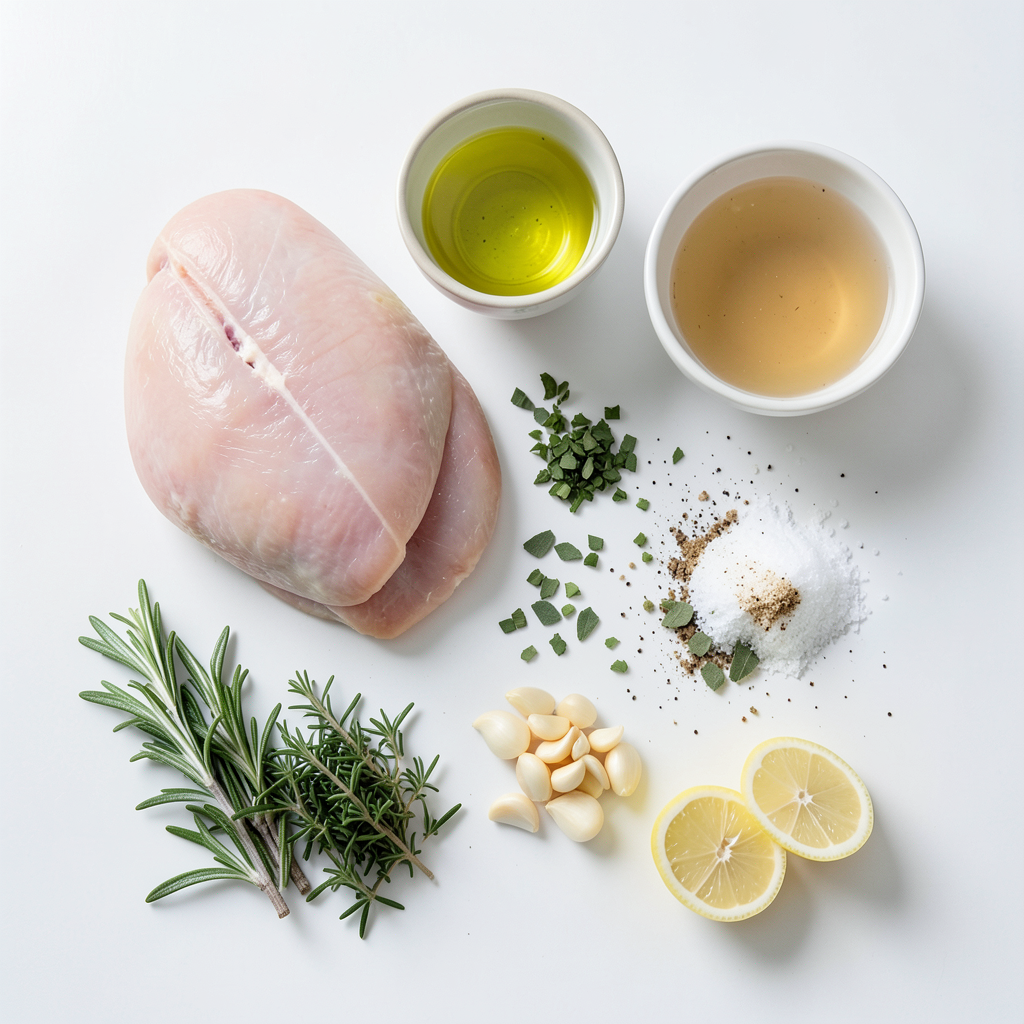
For this recipe, you will need:
- 1 (3-4 pounds) turkey breast, bone-in, skin-on
- 4 tablespoons olive oil, divided
- 4 cloves garlic, minced
- 2 teaspoons fresh rosemary, chopped
- 2 teaspoons fresh thyme, chopped
- 1 teaspoon fresh sage, chopped
- 1 teaspoon onion powder
- Salt and black pepper, to taste
- 1 lemon, zested and juiced
- 1 cup low-sodium chicken broth
These ingredients work together to bring out the turkey's natural flavors.
Recommended Herbs and Seasonings
Using fresh herbs makes a big difference. Rosemary, thyme, and sage give the turkey a bright taste. Garlic adds depth and warmth. Onion powder rounds out the flavor.
You can adjust the amounts of salt and pepper based on your taste. The lemon zest and juice add a fresh kick, balancing the herbs perfectly.
Alternative Ingredients for Different Flavors
Want to switch things up? You can use other herbs like parsley or oregano. For a spicy twist, add some red pepper flakes.
Try using different oils like avocado oil for a unique taste. If you want a more savory flavor, add mushrooms or shallots to the broth. These swaps can make your turkey truly special.
Step-by-Step Instructions
Preparation Steps for the Herb Mixture
To make the herb mix, gather your ingredients. You need olive oil, garlic, rosemary, thyme, sage, onion powder, lemon zest, salt, and pepper. In a bowl, add 2 tablespoons of olive oil. Then, mix in the 4 minced garlic cloves, 2 teaspoons of rosemary, 2 teaspoons of thyme, and 1 teaspoon of sage. Add the onion powder, lemon zest, salt, and pepper. Stir until it forms a thick paste. This herb mixture will give your turkey amazing flavor.
How to Properly Season the Turkey Breast
First, pat the turkey breast dry with paper towels. This helps the skin crisp up. Next, gently loosen the skin from the breast. Be careful not to tear it. Once the skin is loose, rub half of the herb mixture directly onto the meat under the skin. This makes the meat juicy and tasty. After that, take the other half of the mixture and spread it over the skin. Make sure to cover every part. This step is key to getting great flavor.
Searing and Roasting the Turkey: A Guide
Now, heat a large oven-safe skillet over medium-high heat. Add the remaining 2 tablespoons of olive oil. Once the oil is hot, place the turkey breast skin-side down. Sear it for about 5 to 6 minutes until the skin is golden brown. This adds a nice crust. Carefully flip the turkey over. Pour 1 cup of low-sodium chicken broth around the turkey in the skillet. Squeeze the juice of 1 lemon over the top. This adds a bright flavor.
Transfer the skillet to your preheated oven at 375°F (190°C). Roast the turkey for about 1 hour. Use a meat thermometer to check that the internal temperature reaches 165°F (75°C). This ensures that it is fully cooked. Once done, remove it from the oven. Let it rest for 10 to 15 minutes. This lets the juices spread throughout the meat. Finally, carve the turkey and serve it warm. Enjoy the juicy, herb-packed flavor!
Tips & Tricks
How to Achieve Maximum Juiciness
To keep your turkey breast juicy, start with a bone-in and skin-on cut. The bone adds flavor and moisture. Before cooking, pat the turkey dry. This helps the skin crisp up. Use a mix of olive oil and herbs to rub under the skin. The oil locks in moisture.
Best Practices for Seasoning and Flavor
Seasoning is key to great taste. Use fresh herbs like rosemary, thyme, and sage for the best flavor. Mix these with garlic, onion powder, salt, and pepper. A squeeze of lemon juice brightens the dish. Remember to rub the seasoning both under the skin and on the surface. This way, every bite bursts with flavor.
How to Avoid Overcooking
To avoid dry turkey, monitor the cooking temperature closely. Use a meat thermometer. The turkey is done at 165°F (75°C). Start checking the temperature around 50 minutes into cooking. If it reaches the right temp, take it out. Let it rest for 10-15 minutes before carving. This helps juices spread evenly throughout the meat.
Pro Tips
- Use a Meat Thermometer: Ensure your turkey breast reaches an internal temperature of 165°F (75°C) for safe and juicy meat.
- Let It Rest: Allow the turkey to rest for 10-15 minutes after roasting to let the juices redistribute, making it more flavorful.
- Choose Fresh Herbs: Fresh herbs like rosemary, thyme, and sage provide a more vibrant flavor compared to dried herbs.
- Make Extra Gravy: Use the pan drippings mixed with a bit of broth to create a delicious gravy that complements the turkey.
Variations
Different Flavor Profiles for Herb-Roasted Turkey
You can change the flavor of your turkey breast easily. Try adding different herbs or spices to create new tastes. For a Mediterranean twist, use oregano, basil, and lemon zest. If you prefer a spicy kick, add paprika and cayenne pepper. You can even go for an Asian flavor by mixing ginger and sesame oil. Each mix brings a unique taste to your table.
Keto-Friendly Side Dishes to Serve
Pair your turkey with tasty keto-friendly sides. Roasted vegetables like zucchini, asparagus, or Brussels sprouts work well. You can also make a creamy cauliflower mash instead of potatoes. A fresh salad with mixed greens, avocado, and a light vinaigrette adds color and crunch. These sides keep your meal low-carb and delicious.
Adjusting Recipe for Smaller or Larger Turkey Breasts
If you need to adjust the recipe, it’s simple. For smaller turkey breasts, cut the cooking time by about 15 minutes for each pound. If your turkey is larger, add 15 minutes for each pound over four. Always check the internal temperature to ensure it’s 165°F (75°C). This way, your turkey will stay juicy and safe to eat.
Storage Info
How to Store Leftover Herb-Roasted Turkey
To store leftover turkey, let it cool first. Place it in an airtight container. Keep the turkey in the fridge. It stays fresh for about three to four days. For best taste, slice the turkey before storing. This helps the flavor stay strong.
Reheating Tips for Best Flavor
When ready to eat the turkey, reheat it gently. You can use the oven or microwave. If using the oven, set it to 325°F (160°C). Add some chicken broth or water to keep it moist. Cover the turkey with foil to prevent drying out. Heat until it reaches 165°F (75°C) inside. This helps keep the turkey juicy and tasty.
Freezing Guidelines for Turkey Breast
If you want to save turkey for later, freezing is a great choice. Wrap the turkey tightly in plastic wrap. Then put it in a freezer bag. Remove as much air as possible. The turkey can stay in the freezer for up to three months. When you’re ready to use it, thaw it in the fridge overnight before reheating. This ensures it remains juicy and flavorful.
FAQs
What is the best way to check if turkey is cooked?
To check if your turkey is cooked, use a meat thermometer. Insert it into the thickest part of the breast. The turkey is safe to eat when it reaches 165°F (75°C). This ensures it is juicy and free from harmful bacteria. If you do not have a thermometer, cut into the meat. The juices should run clear, not pink.
How can I make this recipe dairy-free?
To make this recipe dairy-free, avoid butter and cream. Use olive oil, as the recipe suggests. The herbs and spices add great flavor without dairy. You can also use coconut oil if you want a different taste. This will keep the turkey moist and flavorful.
Can I use a boneless turkey breast for this recipe?
Yes, you can use a boneless turkey breast. Just adjust the cooking time. Boneless turkey breasts cook faster than bone-in ones. Start checking the temperature at about 45 minutes. Aim for the same internal temperature of 165°F (75°C) for safety and juiciness. Enjoy your meal!
In this post, we explored how to make a juicy keto herb-roasted turkey breast. We covered the key ingredients, step-by-step preparation, tips for juiciness, and recipe variations. Remember, seasoning and cooking time are key to great flavor. With some practice, you will master this dish. Enjoy trying new herbs and flavors. Your turkey will impress family and friends at any meal. Now, grab your ingredients and start roasting!