
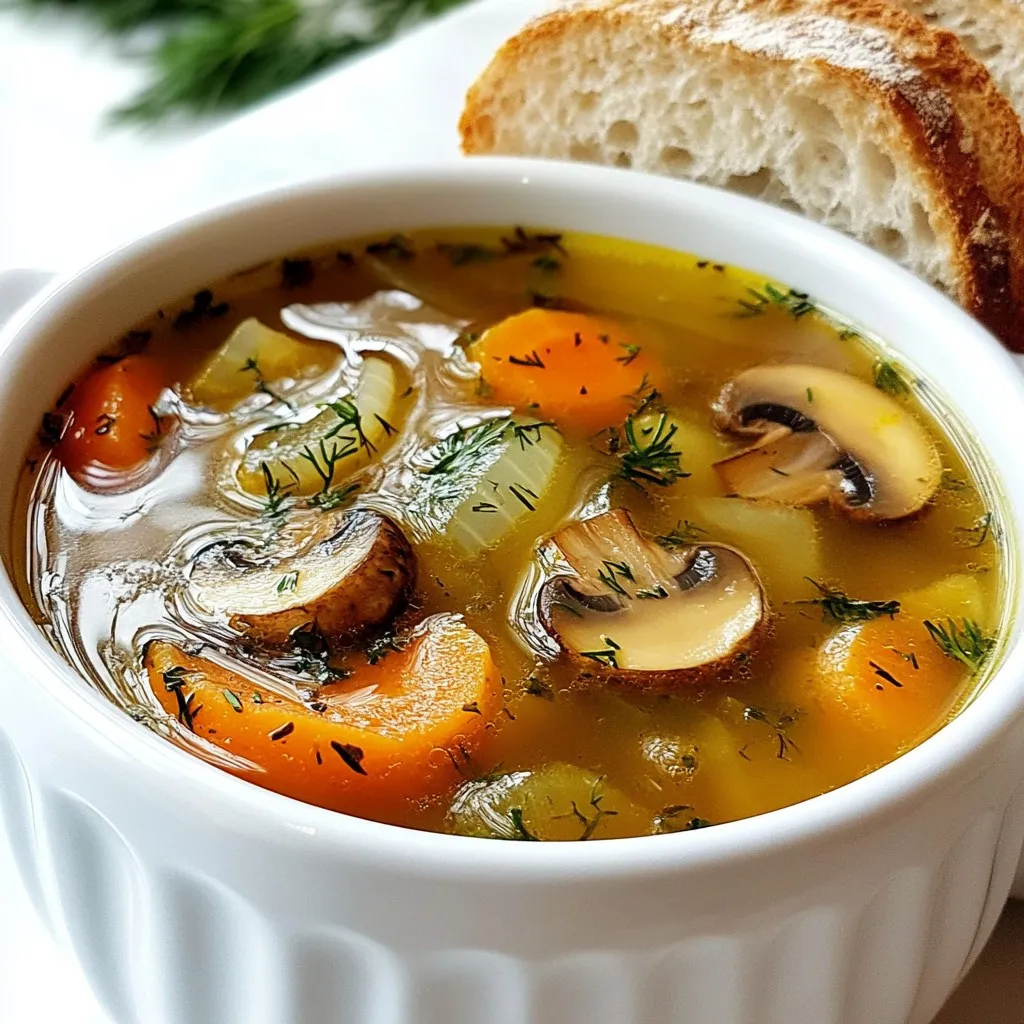
Want to nourish your body with a warm and tasty bowl of homemade vegetable broth? I’ll show you how to create a rich, flavorful broth using simple ingredients right from your kitchen. From fresh veggies to the right herbs and spices, I’ll cover everything you need. This guide will walk you through easy methods, tips, and variations. Get ready to warm your soul with every sip!
Why I Love This Recipe
- Fresh Flavor: This broth captures the essence of garden-fresh vegetables, making it a vibrant and flavorful base for soups and stews.
- Versatile Use: Use this broth as a base for countless dishes, from risottos to sauces, enhancing the taste with every use.
- Health Benefits: Packed with nutrients from an array of vegetables, this broth is not only delicious but also good for your health.
- Easy Preparation: With simple ingredients and straightforward steps, this recipe can be made effortlessly, even by beginner cooks.
Ingredients
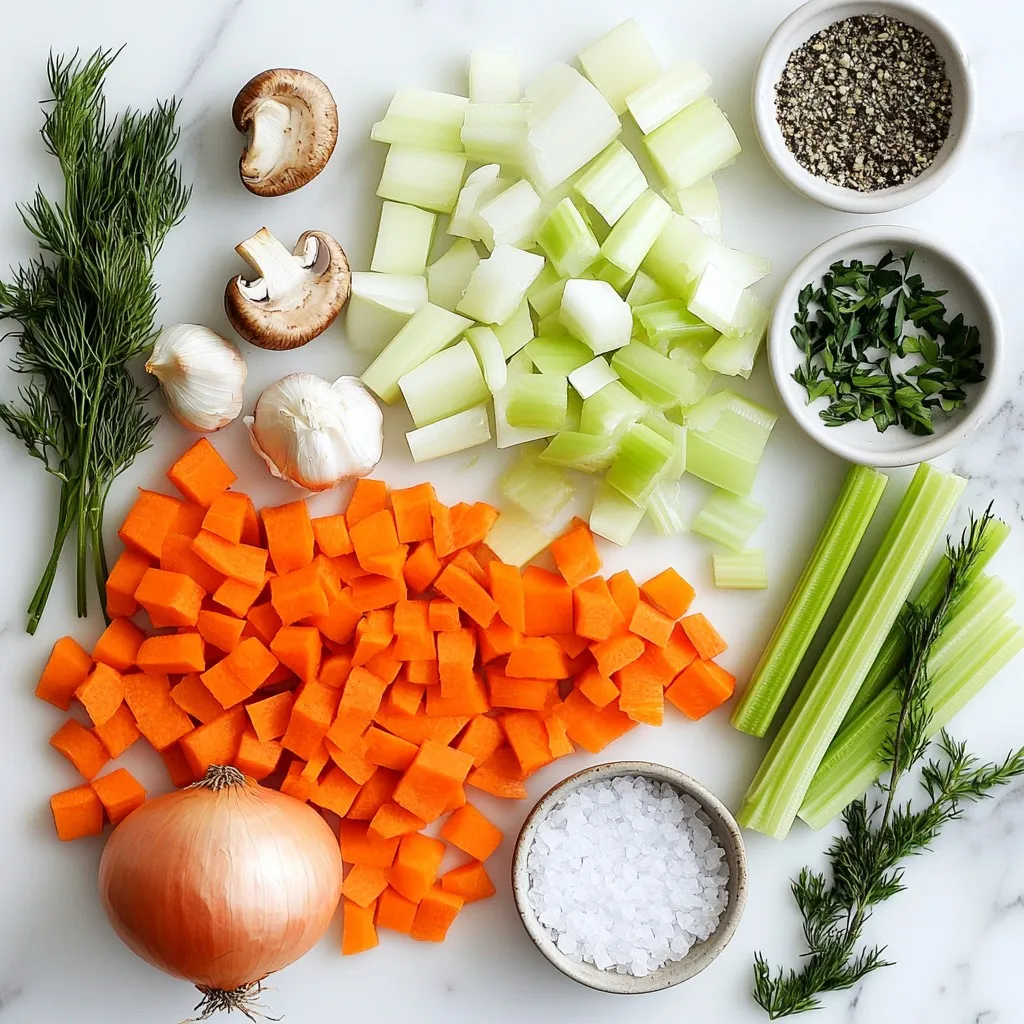
To make a tasty homemade vegetable broth, you need fresh vegetables, herbs, and spices. Here’s a list of the key ingredients:
Fresh Vegetables Used
- 1 large onion, quartered
- 2 carrots, roughly chopped
- 2 celery stalks, roughly chopped
- 4 cloves garlic, smashed
- 1 cup mushrooms, sliced
These fresh vegetables give the broth its rich and warm flavor. The onion adds sweetness, while the carrots bring a nice earthiness. The celery offers a crisp taste, and garlic boosts the flavor. Mushrooms add depth and umami.
Herbs and Spices
- 1 teaspoon dried thyme
- 1 teaspoon dried rosemary
- 1 bay leaf
These herbs and spices enhance the broth’s aroma and taste. Thyme provides a subtle, herbal note. Rosemary adds a pine-like flavor that brightens the mix. The bay leaf introduces a hint of warmth.
Liquid and Seasoning
- 8 cups water
- Salt and pepper to taste
Water is the base for your broth. It carries all the flavors from the vegetables and herbs. Seasoning with salt and pepper at the end ensures you achieve the perfect balance of taste.
Using fresh, high-quality ingredients makes a big difference. You can customize the flavors with your favorite herbs. Enjoy making this wholesome and flavorful broth!
Step-by-Step Instructions
Preparation of Ingredients
Start by chopping your vegetables. For the onion, cut it into quarters. Roughly chop two carrots and two celery stalks. Smash four cloves of garlic with the side of your knife. Slice one cup of mushrooms. This mix of fresh veggies gives the broth its rich taste.
Cooking the Broth
Now, let’s combine the ingredients in a stockpot. Add your quartered onion, chopped carrots, chopped celery, smashed garlic, and sliced mushrooms into the pot. Next, add one teaspoon of dried thyme, one teaspoon of dried rosemary, and one bay leaf. Pour in eight cups of water, making sure all the veggies are submerged.
Place the pot on the stove and bring the mixture to a boil over medium-high heat. Once it’s boiling, reduce the heat to low. Let it simmer uncovered for 1.5 to 2 hours. During this time, skim off any foam or impurities that rise to the top. This helps keep your broth clear and clean.
Straining and Seasoning
After simmering, remove the pot from heat and let it cool slightly. Now, it’s time to strain the broth. Use a fine-mesh sieve or cheesecloth to filter out the solids. Pour the broth into a large bowl or another pot, leaving the solids behind.
Finally, season your broth with salt and pepper to taste. Give it a stir and adjust the seasoning as needed. Enjoy your homemade vegetable broth warm. You can also store it in the fridge for up to a week or freeze it for later use.
Cooking Methods
Stovetop Method
Cooking vegetable broth on the stovetop is simple and rewarding. Follow these steps:
1. Start with a large stockpot.
2. Add 1 quartered onion, 2 chopped carrots, 2 chopped celery stalks, 4 smashed garlic cloves, and 1 cup of sliced mushrooms.
3. Mix in 1 teaspoon of dried thyme and 1 teaspoon of dried rosemary for flavor.
4. Add 1 bay leaf.
5. Pour in 8 cups of water. Make sure all the veggies are covered.
6. Heat the pot on medium-high until it boils.
7. After boiling, lower the heat to let it simmer uncovered for 1.5 to 2 hours.
8. Skim off any foam that forms on top.
9. When done, take the pot off the heat. Let it cool a bit.
10. Strain the broth through a fine-mesh sieve into a bowl. Discard the solids.
11. Season the broth with salt and pepper to your taste.
Slow Cooker Method
The slow cooker method is great for busy days. It lets the flavors blend well. Here’s how to do it:
1. Place all the same ingredients into your slow cooker.
2. Combine the quartered onion, chopped carrots, chopped celery, smashed garlic cloves, sliced mushrooms, dried thyme, dried rosemary, and bay leaf.
3. Pour in 8 cups of water.
4. Cover and set the slow cooker on low for about 6 to 8 hours.
5. Once finished, strain the broth just like in the stovetop method.
6. Add salt and pepper to taste.
Instant Pot Method
The Instant Pot is perfect for a quick broth. It cuts down cooking time. Here’s how to make it:
1. Add the same ingredients into the Instant Pot: onion, carrots, celery, garlic, mushrooms, thyme, rosemary, and bay leaf.
2. Pour in 8 cups of water.
3. Close the lid and set it to high pressure for 30 minutes.
4. Once done, let the pressure release naturally for about 15 minutes.
5. Strain the broth into a bowl and discard the solids.
6. Season with salt and pepper to your taste.
Each method gives you a rich and tasty broth. Pick the one that fits your schedule best!
Pro Tips
- Freshness Matters: Using fresh vegetables will greatly enhance the flavor of your broth. Look for vibrant, firm vegetables with no blemishes.
- Layering Flavors: For a deeper flavor, consider roasting the vegetables before adding them to the broth. This adds a nice caramelized taste.
- Seasoning Wisely: Add salt gradually and taste as you go. This way, you can control the saltiness of the broth without overpowering the natural vegetable flavors.
- Storage Savvy: Make sure to let the broth cool completely before storing it. This prevents condensation from forming in the container, which can dilute the flavor.
Tips & Tricks
Enhancing Flavor
To boost your vegetable broth, consider adding more flavors. Here are some ideas:
- Leeks: They add a mild and sweet taste.
- Tomatoes: Use fresh or canned for a rich flavor.
- Bell Peppers: They bring a nice sweetness and color.
- Corn: Adds a touch of sweetness and creaminess.
- Zucchini: A mild, fresh taste that blends well.
Feel free to mix and match these ingredients. Each addition can change the broth's taste. Experiment and find what you love!
Common Mistakes to Avoid
To make perfect broth, steer clear of these common mistakes:
- Too much salt: Add salt at the end to control saltiness.
- Overcooking: Simmer gently for 1.5 to 2 hours.
- Ignoring skim foam: Skim off foam for a clear broth.
- Not straining well: Use a fine-mesh sieve to remove solids.
These tips help you get a clear and tasty broth.
Serving Suggestions
Presentation makes your broth appealing. Here are some tips:
- Serve the broth warm in a bowl.
- Garnish with fresh herbs like parsley or dill.
- Pair it with crusty bread for dipping.
- Add a splash of lemon juice for brightness.
These small touches enhance the experience of your homemade broth. Enjoy!
Variations
Adding Different Vegetables
You can add many veggies to your broth. Seasonal vegetables add more flavor. Use zucchini in summer or butternut squash in fall. Sweet potatoes work well in winter. In spring, try asparagus or peas. The key is to use fresh, local produce when you can. This makes your broth taste even better.
Vegan vs. Non-Vegan Options
This broth is vegan, making it great for all diets. If you want a non-vegan version, add chicken scraps or beef bones. This will give your broth a richer flavor. You can also mix in a bit of fish sauce for depth. Just remember to adjust your seasoning since these options can be salty.
Spiced Variants
Adding spices can change the whole taste. For warmth, try adding a pinch of red pepper flakes or a dash of hot sauce. If you like herbs, toss in some fresh basil or cilantro for a fresh twist. A splash of soy sauce or miso paste can also enrich the flavor. Experiment with different spices to find your favorite mix!
Storage Info
Refrigerating Homemade Broth
To keep your homemade vegetable broth fresh, store it in the fridge. Use clean glass jars or airtight containers. Allow the broth to cool before packing it away. This helps prevent bacteria growth. It’s best to use the broth within a week.
Freezing Vegetable Broth
Freezing is a great way to extend your broth's life. Pour your cooled broth into freezer-safe bags or containers. Leave some space at the top for expansion. I like to freeze in portions. This way, I can grab just what I need. Label each bag with the date.
Shelf Life and Usage
Homemade vegetable broth can last in the fridge for up to seven days. If you freeze it, it can last for about three months. Always check for any off smells or changes in color before using. If it looks or smells strange, throw it away. Enjoy your broth in soups, stews, or sauces!
You learned how to make a flavorful vegetable broth using fresh veggies, herbs, and spices. We covered how to prepare, cook, and store your broth. Remember, you can adjust flavors and try different vegetables based on your taste. Keep in mind the tips to avoid common mistakes and make the perfect broth. Whether you use a stovetop, slow cooker, or Instant Pot, this broth adds warmth to any meal. Enjoy your cooking adventur