

Cozy up with my creamy Butternut Squash Risotto, a heartwarming one-pot recipe! This dish is easy to make and packed with flavor. You’ll find simple steps, fresh ingredients, and handy tips to create a warm meal everyone will love. Let’s dive into a world of rich taste and comfort, perfect for chilly nights or any day you crave something special!
Why I Love This Recipe
- Comforting Flavor: This risotto is rich and creamy, making it the perfect cozy dish for chilly evenings.
- Seasonal Ingredients: Butternut squash brings a natural sweetness and vibrant color, celebrating the flavors of fall.
- Customizable: You can easily adapt this recipe by adding your favorite herbs or vegetables for a personal touch.
- Simple Preparation: The step-by-step process makes it approachable for both beginner and experienced cooks.
Ingredients
Complete list of ingredients
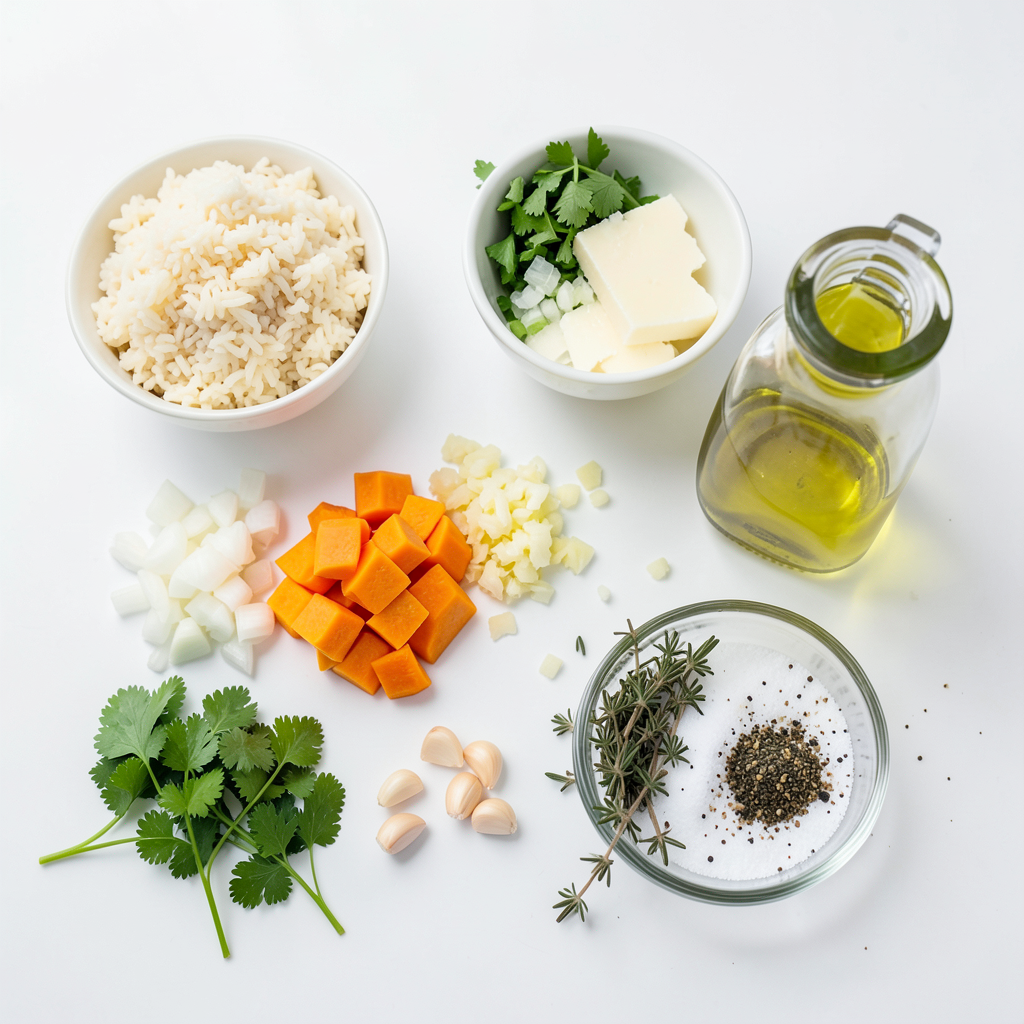
To make Butternut Squash Risotto, gather these simple ingredients:
- 1 ½ cups Arborio rice
- 2 cups butternut squash, peeled and diced
- 1 small onion, finely chopped
- 2 garlic cloves, minced
- 4 cups vegetable broth
- 1 cup unsweetened almond milk (or any plant-based milk)
- ½ cup grated Parmesan cheese (or nutritional yeast for a vegan option)
- 2 tablespoons olive oil
- 1 teaspoon dried thyme
- Salt and pepper to taste
- Fresh parsley for garnish
Optional substitutes for dietary preferences
You can easily adjust this recipe to fit your needs. For a vegan option, replace Parmesan cheese with nutritional yeast. You can also swap almond milk for any plant-based milk you enjoy. If you're not vegan, feel free to use regular milk or cream instead. For gluten-free options, ensure your vegetable broth is certified gluten-free. If you need more protein, try adding cooked chicken or beans.
Importance of using fresh ingredients
Fresh ingredients make the best risotto. Fresh butternut squash adds sweetness and a nice texture. A fresh onion enhances the flavor base, while fresh garlic gives a robust aroma. Using high-quality vegetable broth makes a big difference, too. The better your ingredients, the richer your risotto will taste. Always choose the freshest options you can find for a heartwarming meal.
Step-by-Step Instructions
Detailed cooking instructions
1. First, grab a large pot and heat the olive oil over medium heat.
2. Add the chopped onion and minced garlic to the pot. Cook them until the onion turns soft and clear, about 3-4 minutes.
3. Next, toss in the diced butternut squash. Cook for about 5 minutes to let it soften a bit.
4. Now, add the Arborio rice to the pot. Stir it well for 1-2 minutes. The rice should look a bit clear.
5. Slowly pour in 1 cup of vegetable broth. Stir the rice until it soaks up most of the liquid.
6. Keep adding the broth, one ladle at a time. Wait for the rice to absorb the liquid before adding more. Stir it often. This should take about 20 minutes.
7. When the rice is creamy and still a bit firm, turn the heat low. Mix in the almond milk and Parmesan cheese.
8. Season with dried thyme, salt, and pepper. Stir it well until everything is hot and creamy.
9. Finally, take the pot off the heat. Let it sit for 2-3 minutes before serving.
Timing for each step
- Heating the oil: 1 minute
- Cooking onion and garlic: 3-4 minutes
- Cooking butternut squash: 5 minutes
- Stirring in rice: 1-2 minutes
- Adding broth: 20 minutes
- Mixing in almond milk and cheese: 3 minutes
- Resting time: 2-3 minutes
Tips for visual cues during cooking
- Look for the onion to turn soft and clear.
- The butternut squash should lose its hardness and start to soften.
- The rice will look clear when it's coated with oil.
- You'll know it's ready when the risotto is creamy and the grains are tender but firm.
Tips & Tricks
How to achieve the perfect creamy texture
To get that creamy risotto, use Arborio rice. This rice has a high starch content. The starch makes the dish smooth and rich. Stirring often helps release more starch. Always add broth slowly, letting the rice soak it up. This keeps your risotto creamy and avoids mushiness.
Common mistakes to avoid
One common mistake is adding too much broth at once. This can lead to uneven cooking. Another mistake is not stirring enough. Stirring helps the rice cook evenly and adds creaminess. Lastly, don’t skip the resting time. Letting risotto sit for a few minutes helps it thicken.
Enhancing flavors with additional ingredients
You can add different veggies to boost flavor. Consider mushrooms, spinach, or peas for added color and taste. Fresh herbs like basil or chives also brighten the dish. For a nutty flavor, add toasted pine nuts or walnuts. If you want more depth, a splash of white wine adds richness before the broth.
Pro Tips
- Use Fresh Ingredients: Fresh butternut squash and high-quality vegetable broth will enhance the flavor of your risotto significantly.
- Stir Constantly: Frequent stirring helps release the starches from the Arborio rice, creating a creamy texture in your risotto.
- Adjust Consistency: If your risotto is too thick after adding the almond milk, feel free to add a bit more vegetable broth to achieve your preferred creaminess.
- Add Flavor Variations: Consider adding a pinch of nutmeg or a splash of white wine for an extra layer of flavor.
Variations
Adding protein options (e.g., chicken, beans)
You can boost your butternut squash risotto by adding protein. Chicken is one option. Cook it in the pot before adding the onion. Cut it into small pieces and brown it first. You can also add cooked beans like cannellini or chickpeas. Stir them in once the risotto is nearly done. This adds heartiness and flavor.
Vegan and gluten-free modifications
To keep this dish vegan, swap out the cheese for nutritional yeast. This gives a cheesy taste without dairy. Use vegetable broth and almond milk. For gluten-free options, ensure your broth is gluten-free. The rice is already gluten-free, so you are all set with that. These changes keep the dish tasty and suitable for more diets.
Seasonal vegetable variations
Feel free to play with seasonal veggies. In spring, try adding peas or asparagus. In summer, mix in fresh zucchini or tomatoes. In fall, you can add mushrooms or kale. In winter, try some spinach or root veggies like carrots. These changes bring new flavors and colors to your risotto, making it fun and fresh each time.
Storage Info
Best practices for storing leftovers
To store your butternut squash risotto, let it cool first. Place it in an airtight container. This keeps the dish fresh and prevents it from drying out. You can store it in the fridge for up to three days. Label the container with the date. This helps you track how long it’s been stored.
Reheating tips for optimal flavor and texture
When you’re ready to eat the leftover risotto, add a splash of broth or almond milk. This helps bring back its creamy texture. Heat it on the stove over low heat. Stir it gently to avoid sticking. This method keeps the flavors bright and delicious. You can also use the microwave. Just heat it in short bursts, stirring in between.
Freezing guidelines for long-term storage
If you want to save risotto for later, freezing works well. Cool it completely before packing. Use freezer-safe containers or bags. Remove as much air as possible to prevent freezer burn. You can freeze it for up to three months. When you’re ready to eat, thaw it in the fridge overnight. Reheat as mentioned above, adding liquid to restore creaminess.
FAQs
How to make risotto without stirring constantly?
You can make risotto with less stirring by using a technique called the "oven method." Preheat your oven to 350°F (175°C). After cooking the onion and garlic, stir in the Arborio rice and broth. Cover the pot tightly with a lid and place it in the oven. Bake for 20 minutes. This lets the rice absorb the liquid with less fuss.
Can I use brown rice instead of Arborio rice?
You can use brown rice, but it changes the dish. Brown rice cooks longer and needs more liquid. It will not be as creamy as Arborio rice. If you want to try it, use 2 cups of broth for each cup of brown rice. Cook for 45 to 50 minutes, checking the texture often.
What can I use instead of Parmesan cheese?
You can use nutritional yeast for a vegan option. It adds a cheesy taste without dairy. You can also try vegan Parmesan cheese or a blend of cashews and nutritional yeast. If you want a non-vegan choice, Pecorino Romano works well, adding a nice saltiness to the risotto.
This blog post showed you how to make a great risotto. We looked at the ingredients you need and ideas for substitutes. Fresh ingredients made the dish tasty. The step-by-step instructions helped you cook it just right, with tips to watch for.
You learned how to avoid common mistakes and add flavors. Plus, we explored variations for different diets. Lastly, you found smart ways to store and reheat leftovers. Keep these tips in mind for your next risotto adventure! Enjoy your cooking!